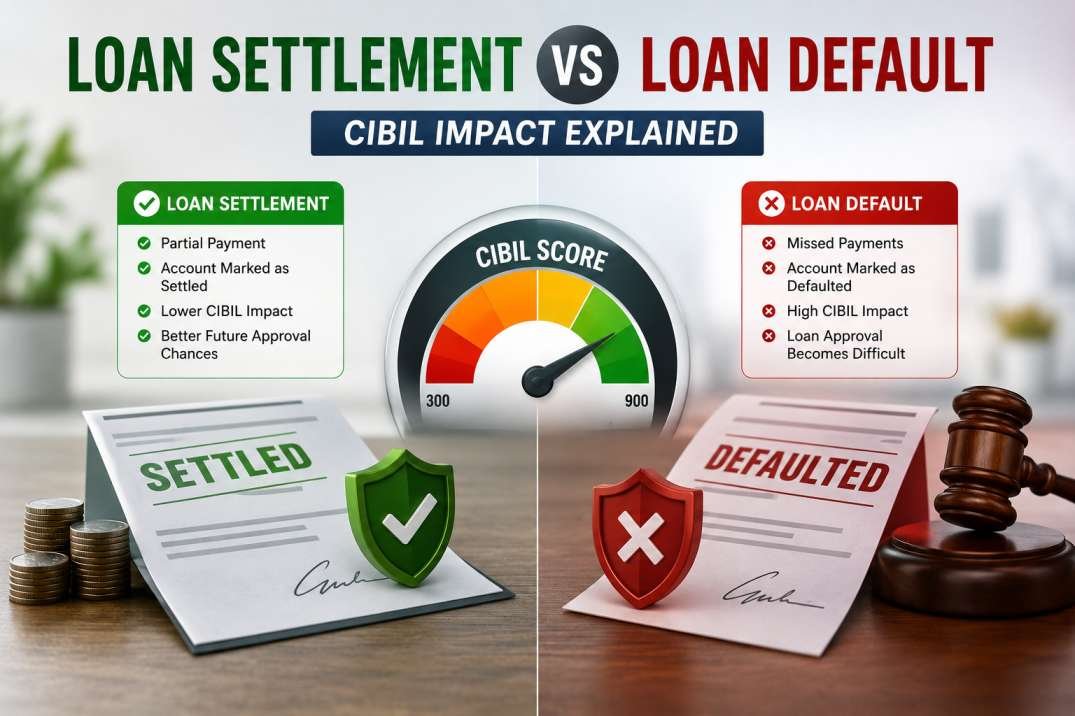
Loan Settlement vs Loan Default: CIBIL Impact Explained
0 Comments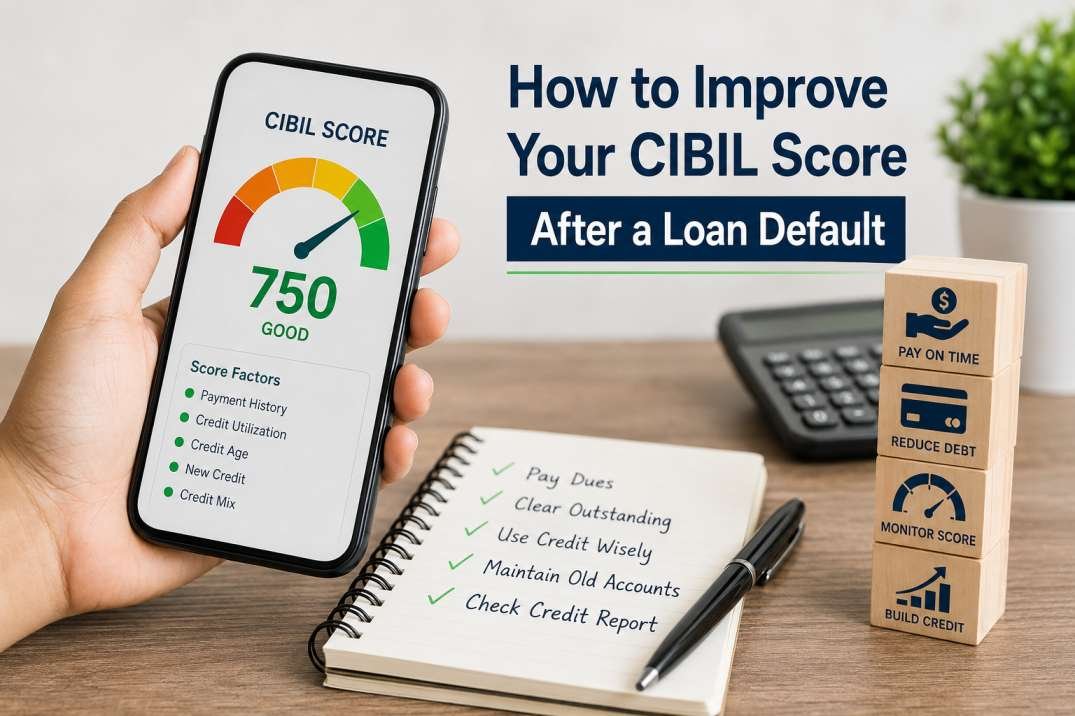
How to Improve Your CIBIL Score After a Loan Default (Step-by-Step)
A loan default damages your CIBIL score severely — but it doesn't permanently destroy it. With the right approach, most borrowers can see measurable improvement within 6-12 months. This guide gives you the exact steps, realistic timelines, and honest expectations.
|
Direct Answer You can improve your CIBIL score after a loan default by: (1) clearing all current outstanding dues, (2) paying all existing EMIs on time every month, (3) reducing credit card utilisation below 30%, (4) avoiding new loan applications for 3-6 months, and (5) applying for a credit-builder loan after 6 months of clean repayment. Expect 6-18 months for meaningful score recovery. |
How Much Does a Loan Default Actually Damage Your CIBIL Score?
|
Type of Default / Delinquency |
Typical CIBIL Score Impact |
|---|---|
|
Single EMI late by 30 days |
-20 to -50 points |
|
Single EMI late by 60 days |
-50 to -80 points |
|
Single EMI late by 90 days (NPA classification) |
-80 to -120 points |
|
Loan settlement (paid less than outstanding) |
Score drops to 400-550 range; 'Settled' tag remains 7 years |
|
Loan written off ('Written Off' tag) |
-150 to -200 points; tag remains 7 years |
|
Court case / legal action |
-150 to -250 points depending on severity |
The 7-Step Plan to Improve CIBIL Score After Default
Step 1 — Get Your CIBIL Report and Understand What You're Dealing With
Download your complete CIBIL report from cibil.com (free once per year, or Rs550 for detailed analysis). Identify every negative entry — defaults, settlements, written-offs, and any errors. You need the complete picture before you start rebuilding.
Also check: whether any negative entries are errors. Wrong account information, incorrectly reported amounts, or accounts that don't belong to you are more common than most borrowers realise. Disputing errors with CIBIL is free and can remove 20-80 points of undeserved damage.
Step 2 — Clear All Outstanding Dues on the Defaulted Account
If your loan was settled (you paid less than the full amount), the 'Settled' tag stays on your report. However, some lenders will update the status to 'Closed' if you pay the written-off portion — contact your original lender's recovery department and negotiate. This doesn't immediately restore your score, but it removes the 'Settled' or 'Written Off' flag after the lender updates their reporting to CIBIL.
Step 3 — Pay Every Current EMI on Time, Every Single Month
This is the most powerful action you can take. CIBIL scores are calculated based on your most recent 24 months of repayment history. Every on-time payment adds a positive data point. Every missed payment resets your recovery. Set up auto-debit for every EMI on the day after your salary credit. Treat EMI payment as non-negotiable.
Step 4 — Reduce Credit Card Utilisation to Below 30%
Credit utilisation — the percentage of your available credit limit that you're using — is the second most important factor after payment history. If your credit limit is Rs1 Lakh and you're consistently using Rs80,000, your utilisation is 80% — this heavily suppresses your score. Reduce outstanding balances and request a limit increase if possible. Keep utilisation under 30% consistently.
Step 5 — Stop All New Loan Applications for 3-6 Months
Every time you apply for a loan, the lender does a hard inquiry on your CIBIL report. Hard inquiries reduce your score by 5-10 points each. With an already-low score, multiple applications make recovery impossible. Freeze all applications, focus on repaying what you have, and revisit in 3-6 months.
Step 6 — Apply for a Secured Credit Card After 6 Months of Clean Repayment
A secured credit card (issued against a fixed deposit) adds a new positive credit account to your CIBIL report. Use it for small, regular purchases (groceries, utilities) and pay the full balance every month. After 6-12 months, this credit card's clean repayment history significantly contributes to score recovery.
Step 7 — Consider a Credit-Builder Loan After 12 Months of Clean History
Some NBFCs and micro-finance institutions offer small credit-builder loans specifically designed for defaulters who have demonstrated 12 months of clean repayment since their default. These small loans (Rs10,000-50,000) with regular EMI payments add positive history to your report and accelerate recovery.
Personal Loan for CIBIL Defaulters
Realistic CIBIL Score Recovery Timeline
|
Timeline |
Realistic Score Recovery |
|---|---|
|
Month 1-3 |
Focus on clearing dues and establishing clean EMI payments. Score may dip further initially. |
|
Month 3-6 |
First positive entries appear from on-time payments. Score stabilises. |
|
Month 6-12 |
Meaningful upward movement visible — typically 30-80 points improvement. |
|
Month 12-18 |
Significant recovery — 80-150 points possible with consistent clean history. |
|
Year 2-3 |
Most borrowers reach the 650-700 range if they maintain perfect repayment. |
|
Year 7 |
Settled/written-off entries are removed from CIBIL report after 7 years. |
You Don't Have to Wait for CIBIL Recovery to Get a Loan
The CIBIL recovery process takes time. But your financial needs exist now. Indifunds provides personal loans to CIBIL defaulters in Delhi NCR who are actively rebuilding their credit — we don't penalise you for your past while you're working on your future. If you earn Rs35,000+ per month, you can access a loan from us today while your CIBIL score recovers in the background.
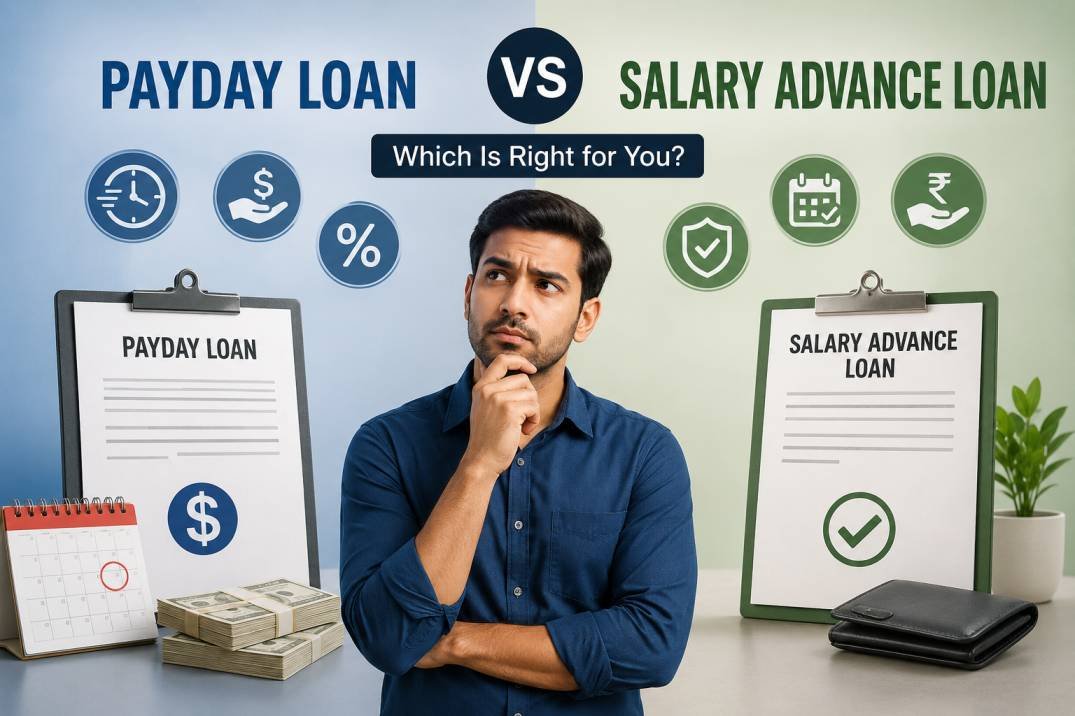
Also Read:- Payday Loan vs Salary Advance Loan: Which Is Right for You?
Frequently Asked Questions
|
How long does it take to improve CIBIL score after default? |
|
Meaningful improvement (30-80 points) is typically visible in 6-12 months of consistent on-time repayment. Reaching a 650+ score from a defaulted state usually takes 12-24 months of perfect financial behaviour. A written-off or settled tag remains for 7 years but its impact reduces over time as positive entries accumulate. |
|
Does paying off a defaulted loan improve CIBIL score? |
|
Yes. Paying off a defaulted loan changes the status from 'Written Off' to 'Closed' — which is significantly better. However, the default record itself remains for 7 years. The score improvement from closing the default varies, but it's always beneficial compared to leaving the account unresolved. |
|
Can I increase my CIBIL score from 500 to 700 in one year? |
|
It's possible but requires perfect execution: clear all current outstanding dues, maintain 100% on-time repayments for 12 months, reduce credit utilisation below 30%, and add a secured credit card with clean payment history. A 200-point improvement in 12 months is achievable but demands complete financial discipline. |
|
What increases CIBIL score fast? |
|
The fastest CIBIL score improvements come from: (1) disputing and removing errors from your CIBIL report, (2) reducing credit card utilisation below 30%, and (3) maintaining perfect on-time EMI payments. Score corrections from error disputes can happen within 30-45 days of filing. |
|
Does loan settlement remove from CIBIL? |
|
No. A loan settlement is not removed from CIBIL — it stays as a 'Settled' tag for 7 years. However, some lenders will update the tag to 'Closed' if you pay the written-off portion of the settled debt. Contact your original lender's recovery department to negotiate this. |
|
How to improve CIBIL score quickly in India? |
|
Quick wins: (1) dispute CIBIL report errors at cibil.com — corrections can add 20-50 points in 30-45 days; (2) pay credit card outstanding to reduce utilisation below 30%; (3) never miss a current EMI payment. These three actions produce the fastest results without requiring new credit. |
|
What is the minimum CIBIL score to get a loan after default? |
|
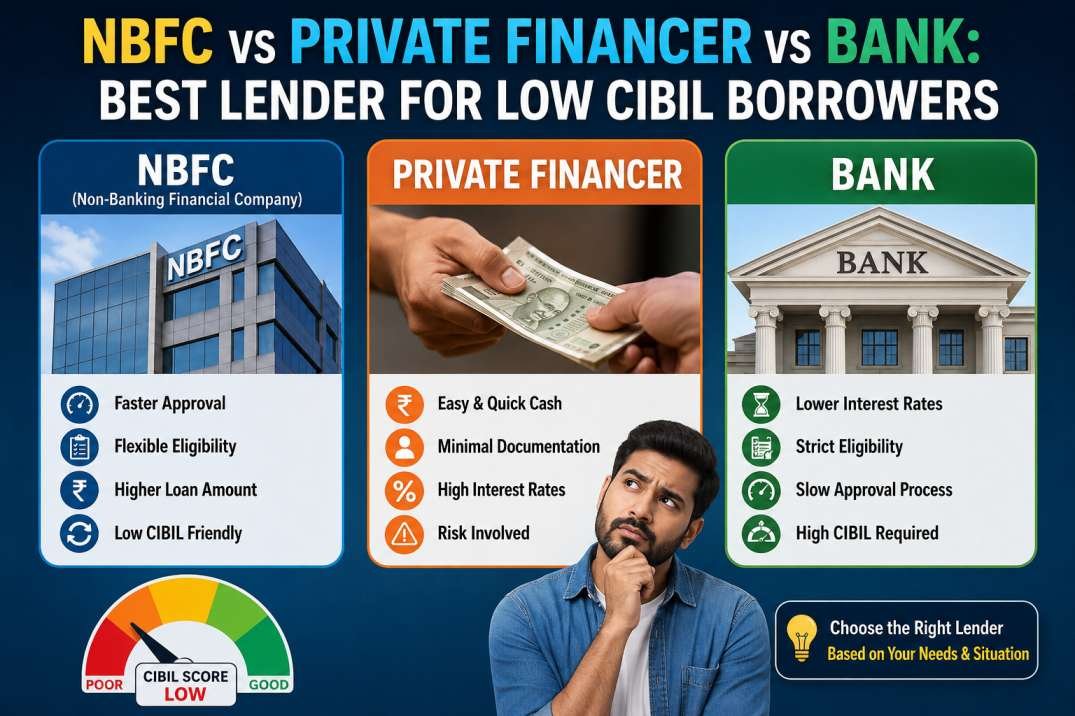
Banks require 700+ CIBIL even after default recovery. Salary-based private lenders like Indifunds have no minimum CIBIL score — they approve CIBIL defaulters based on current salary (Rs35,000+). You don't need to wait for CIBIL recovery to get a loan from Indifunds. |
|
Does CIBIL score increase after repaying personal loan? |
|
Yes. Successfully repaying a personal loan marks it as 'Closed' on your CIBIL report, which positively impacts your score. More importantly, each on-time EMI payment during the loan tenure adds positive payment history that builds your score consistently. |
|
Is 600 CIBIL score good or bad? |
|
A 600 CIBIL score is below average by bank standards (banks prefer 700+). It's not a terminal position — it means you're in NBFC territory at best and private lender territory at Indifunds. With 12-18 months of clean repayment, moving from 600 to 680-700 is realistic. |
|
Can I get a loan while rebuilding my CIBIL score? |
|
Yes. Indifunds approves personal loans for salaried employees who are actively rebuilding their CIBIL score after defaults. You don't have to choose between getting funds now and improving your credit — both can happen simultaneously. Call 8595702470 for a free eligibility check. |
Recent News