Loan Settlement vs Loan Default: CIBIL Impact Explained
0 Comments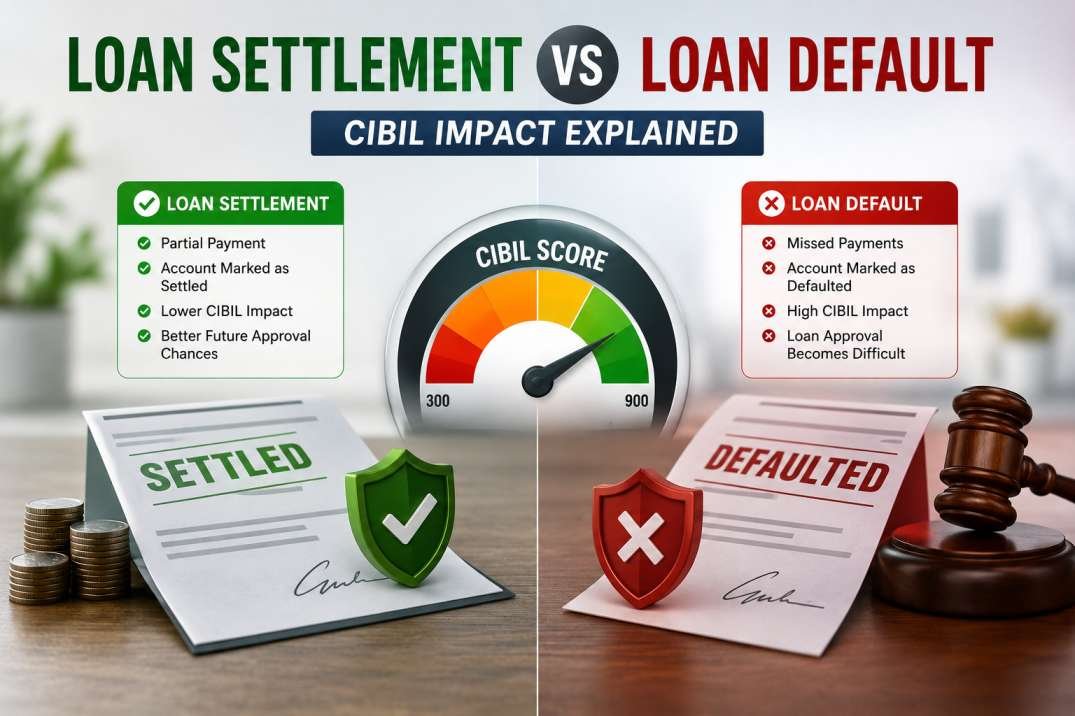
Loan Settlement vs Loan Default: CIBIL Impact Explained
Loan settlement and loan default are two terms that are often confused — but they have different legal meanings, different CIBIL consequences, and different recovery paths. This guide explains the distinction clearly, without jargon, so you can make informed decisions.
|
Direct Answer Loan default = you stopped paying and did not resolve the debt. Loan settlement = you paid a negotiated amount less than the full outstanding balance. Both severely damage your CIBIL score. A settlement creates a 'Settled' tag that stays for 7 years. A default creates a 'Written Off' tag. Both make bank loans nearly impossible — but private lenders like Indifunds still approve on salary basis. |
Loan Default — What It Means Exactly
A loan default occurs when you fail to make loan repayments for 90 consecutive days or more. At that point:
- The lender classifies the loan account as an NPA (Non-Performing Asset)
- The account is reported to CIBIL with status 'Doubtful' or 'Loss'
- If the lender later writes off the debt internally, the CIBIL status changes to 'Written Off'
- The lender may initiate legal proceedings and report the default to CIBIL under legal action
A default does not mean the debt disappears. The outstanding amount remains legally owed. The lender or a recovery agent can pursue repayment for years after the default occurs. Apply Now!
Loan Settlement — What It Means Exactly
A loan settlement occurs when you and the lender agree that you will pay a reduced amount in full and final settlement of the outstanding loan. This typically happens when:
- You've already defaulted and the lender prefers partial recovery over legal proceedings
- You can make a lump sum payment but can't repay the full outstanding amount
- The lender agrees to waive penalties, late fees, or part of the principal in exchange for immediate payment
After settlement, the lender marks the account as 'Settled' — not 'Closed.' This is the critical distinction that most borrowers don't understand before settling.
CIBIL Impact Comparison: Default vs Settlement
|
Factor |
Loan Default |
Loan Settlement |
|---|---|---|
|
CIBIL Status Tag |
'Written Off' or 'Doubtful' |
'Settled' — not 'Closed' |
|
Score Impact |
-150 to -200 points or more |
-75 to -150 points |
|
Remaining Debt |
Full outstanding amount owed |
Waived after settlement payment |
|
Duration on CIBIL Report |
7 years from default date |
7 years from settlement date |
|
Bank Loan Eligibility |
Very difficult — borderline impossible |
Very difficult — but easier than default |
|
Salary-Based Lender Eligibility |
Possible with Rs35K+ salary |
Possible — viewed as financial responsibility |
|
Legal Risk |
Lender can pursue legal action |
No legal risk after settlement confirmed |
Should You Settle or Try to Pay in Full?
This is one of the most important financial decisions for a borrower in default. Here is the honest answer:
|
Always Try to Pay in Full If Possible A loan marked 'Closed' (full repayment) has a far better CIBIL impact than 'Settled.' Even if the lender offers a settlement, if you can arrange the full outstanding amount — from family, from a salary advance, from asset liquidation — paying in full and getting a 'Closed' status is significantly better for your credit recovery. The score difference between 'Closed' and 'Settled' can be 50-100 points. |
However, if full repayment is genuinely not possible, settlement is far better than continued default. A 'Settled' account stops accumulating penalties and legal risk. It demonstrates that you took responsibility for the debt and resolved it — even if partially. Personal Loan in Delhi NCR
What Happens to Your CIBIL Score After Settlement — Month by Month
|
Timeline |
What Happens to Your Credit Position |
|---|---|
|
Immediately after settlement |
Account marked 'Settled.' Score reflects the settlement — typically 400-550 range. |
|
Month 1-3 |
Focus on paying all remaining obligations on time. No new applications. |
|
Month 3-6 |
Clean repayment history starts adding positive data points. Score begins stabilising. |
|
Month 6-12 |
Meaningful upward movement — typically 30-80 points if repayment is clean. |
|
Year 1-3 |
Reaching 600-650 is realistic with consistent, perfect repayment behaviour. |
|
Year 7 |
'Settled' tag is removed from CIBIL report. Clean slate for future credit. |
Can You Get a Loan After Settlement? Yes — Here's How
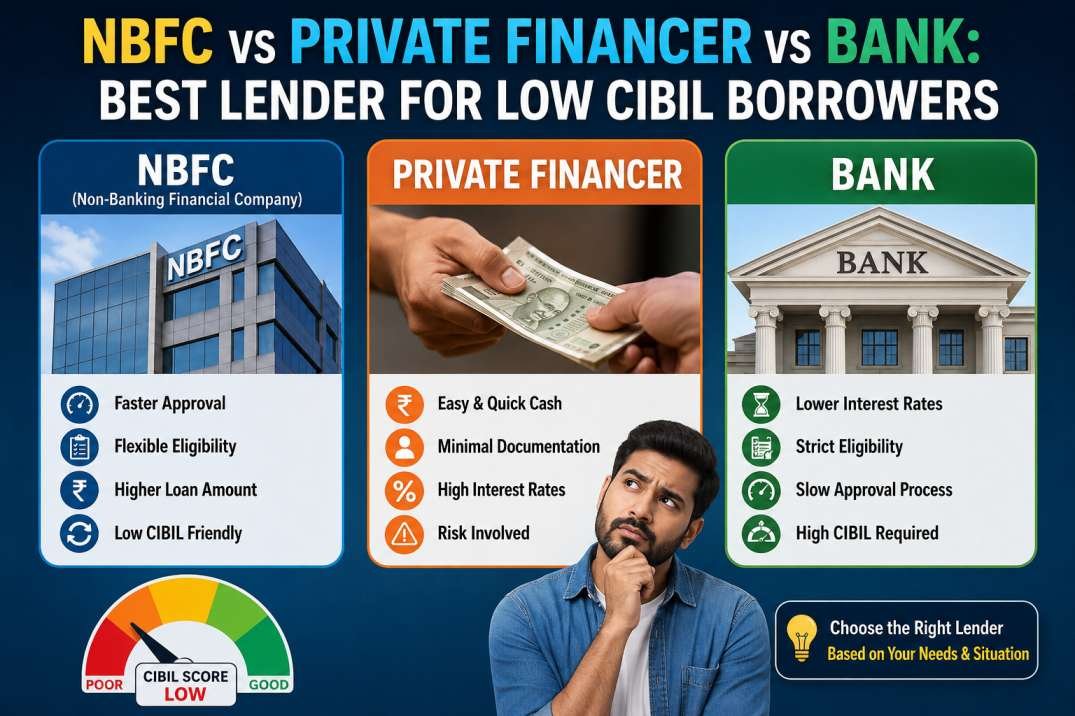
Banks will largely reject settled CIBIL applicants for 3-5 years minimum. However, salary-based private lenders evaluate your current financial situation — not your CIBIL tags. Indifunds approves personal loans for settled-loan applicants in Delhi NCR every month, provided they:
- Earn a current net monthly salary of Rs35,000 or more
- Show clean, regular salary credits in the last 6 months bank statement
- Have stable current employment
- Have no active defaults on current ongoing obligations
The settlement itself is not an automatic disqualifier at Indifunds — it's context. If you settled a loan because of a medical emergency two years ago and are now earning steadily, that tells a story of financial resilience, not financial irresponsibility. Contact Us!
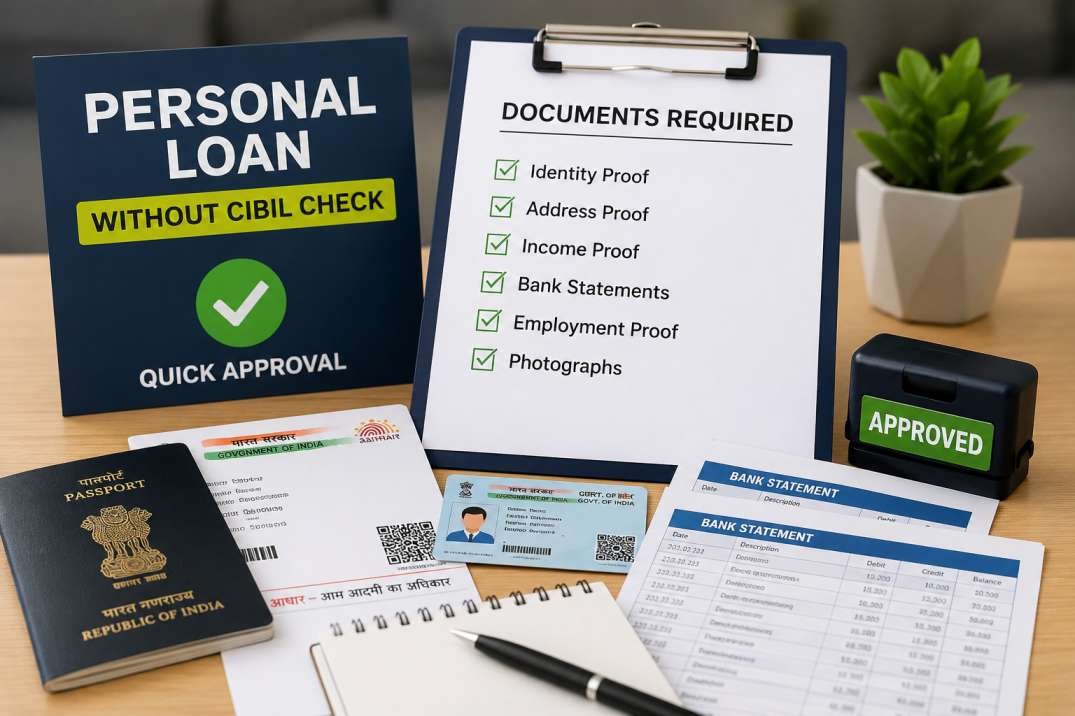
Also Read: Documents Required for a Personal Loan Without CIBIL Check
Frequently Asked Questions
|
What is the difference between loan settlement and loan closure? |
|
Loan closure means you repaid the full outstanding amount — the account is marked 'Closed' on your CIBIL report. Loan settlement means you paid less than the full amount in a negotiated final settlement — the account is marked 'Settled.' Closed is far better for your CIBIL score and credit future. |
|
Does loan settlement affect CIBIL score badly? |
|
Yes. A loan settlement significantly damages your CIBIL score — typically dropping it to the 400-550 range and creating a 'Settled' tag that remains for 7 years. However, it's better than continued default, which adds ongoing damage through NPA classification and potential legal action. |
|
Can I remove settled status from CIBIL? |
|
You cannot simply remove a 'Settled' tag — but you can change it to 'Closed' by paying the written-off portion to the original lender. Contact the lender's recovery department, negotiate payment of the outstanding written-off amount, get written confirmation, and request them to update CIBIL status to 'Closed.' |
|
How long does loan settlement stay on CIBIL report? |
|
A loan settlement ('Settled' tag) remains on your CIBIL report for 7 years from the date of settlement. After 7 years, the entry is removed automatically. This doesn't mean you can't get loans during this period — salary-based lenders like Indifunds approve settled-loan applicants based on current income. |
|
What happens after 7 years of loan default in India? |
|
After 7 years, the default entry (Written Off, Settled, NPA) is removed from your CIBIL report. Your credit profile effectively starts fresh — though any new credit behaviour from the past 24 months will still be reflected. This is the CIBIL 'statute of limitations' for negative entries. |
|
Should I settle a loan or let it default? |
|
Always choose settlement over continued default if you can arrange a lump sum payment. Settlement stops the ongoing damage — no more accumulating interest, penalties, or legal risk. It also gives you a resolved status on CIBIL rather than an active default, which is meaningfully better for future credit access. |
|
Can I get a personal loan after loan settlement in India? |
|
Yes. Indifunds provides personal loans to salaried employees with loan settlements in Delhi NCR. We evaluate your current salary (Rs35,000+) and employment stability. A settlement on your CIBIL report is not an automatic disqualifier — it's context we factor in alongside your present financial position. |
|
How does CIBIL score recover after settlement? |
|
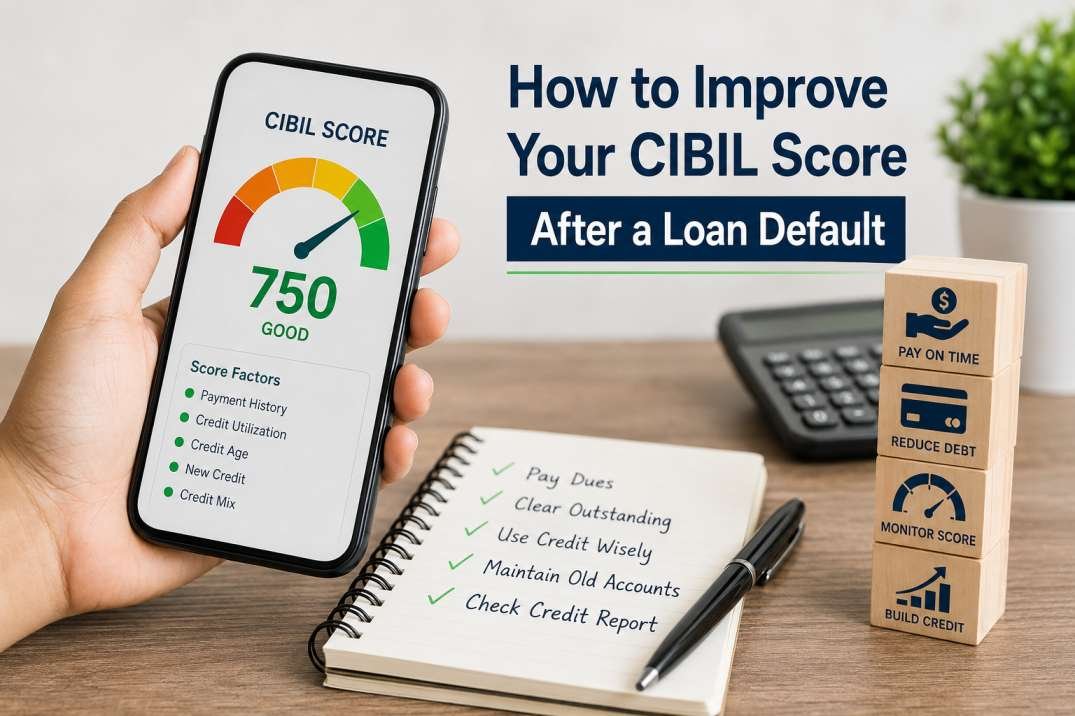
CIBIL score recovery after settlement requires: clearing all current obligations on time, reducing credit utilisation, avoiding new applications for 3-6 months, and adding positive credit history through a secured credit card. Expect 30-80 points improvement in 6-12 months of consistent clean behaviour. |
|
What is loan write-off in India? |
|
A loan write-off occurs when a bank classifies a loan as uncollectable and removes it from their active loan book for accounting purposes. This doesn't eliminate your legal obligation — the bank or a recovery agent can still pursue repayment. The CIBIL status changes to 'Written Off,' which is the most severe negative classification. |
|
Is loan settlement a criminal offense in India? |
|
No. Loan settlement is not a criminal offense in India — it's a civil financial matter between borrower and lender. However, deliberate loan fraud (submitting false documents, impersonation, etc.) is a criminal offense. Defaulting on a loan and settling are civil matters resolved through negotiation or civil courts. |
Recent News