In this guide
Updated: 4 November 2026
Most loans taken in a hurry, and most loans taken from risky apps, start with the same problem: an unexpected expense and no savings to cover it. A medical bill, a job gap or an urgent family need turns into high-cost debt within days. An emergency fund breaks that cycle. This guide shows salaried people how much to keep, where to keep it and how to build it step by step, even on a tight salary or while repaying EMIs.
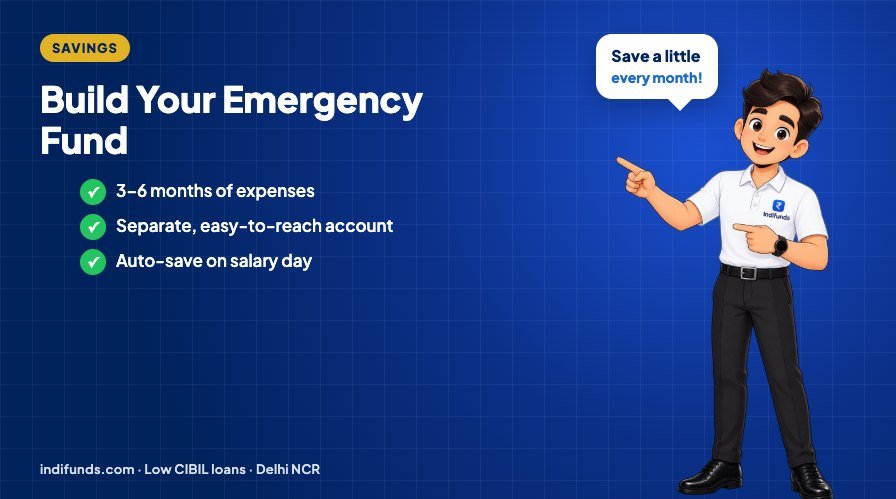
Quick answer: Aim for an emergency fund equal to 3 to 6 months of your essential expenses, including EMIs. Start with a first goal of one month. Keep it separate from your spending account, in a place you can reach within a day, such as a savings account or a sweep fixed deposit. Build it with an automatic transfer on salary day, and refill it whenever you use it.
How much do you need?
| Your situation | Suggested fund |
|---|---|
| Single, stable job, living with family | 3 months of essential expenses |
| Supporting a family or paying rent | 4 to 6 months |
| Commission-based or unstable income | 6 months or more |
| Already repaying several EMIs | At least 3 months including EMIs |
Essential expenses include rent, food, utilities, school fees, insurance premiums, transport and EMIs, not shopping or eating out.
Example
Essential monthly expenses of ₹28,000 (including a ₹6,000 EMI) mean a 3-month fund of ₹84,000 and a 6-month fund of ₹1,68,000. Your first target is one month: ₹28,000.
Where to keep it
- Savings account: instant access; use a separate account so you do not spend it by mistake.
- Sweep or auto fixed deposit: slightly better interest while staying easy to withdraw.
- Not suitable: shares, crypto or anything whose value can fall when you need the money.
How to build it step by step
- Set an automatic transfer on salary day, even ₹2,000 to ₹3,000 a month.
- Add windfalls: bonuses, incentives, tax refunds and gifts.
- Cut one cost: an unused subscription or a few takeaway meals a month adds up.
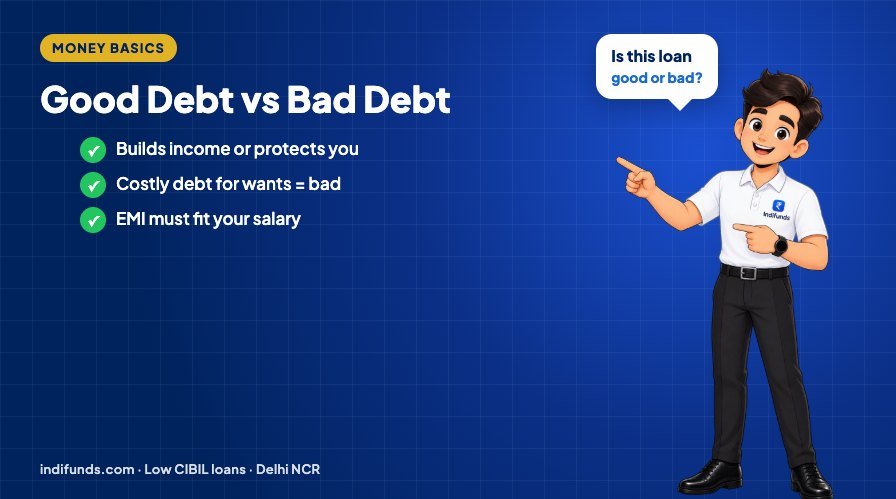
- Clear costly debt in parallel: keep a small buffer first, then put extra towards the costliest loan. See good debt vs bad debt.
- Refill after use: treat the refill like an EMI until the fund is back.
What counts as an emergency?
Medical treatment, loss of income, urgent home or vehicle repairs and essential family travel. A sale, a new phone or a holiday is not an emergency.
Why it matters for your CIBIL score
An emergency fund lets you pay EMIs on time even in a bad month. On-time payments are the biggest factor in your credit score, so the fund protects your score as well as your peace of mind. Read how to improve your CIBIL score after a default.
If an emergency comes before the fund is ready
Use a regulated lender, borrow only the gap, and avoid apps that ask for fees in advance or access to your contacts. Read emergency loans with a low CIBIL score. Indifunds, a loan facilitator in Noida working with lending partners, helps salaried people in Delhi NCR with an in-hand salary of ₹35,000 or more check payday, salary-advance and personal loan options. No fee before approval; approval, amount and rate depend on eligibility, verification and the lender's final decision.
Frequently asked questions
How much emergency fund should a salaried person have?
Usually 3 to 6 months of essential expenses, including EMIs. Start with a first goal of one month.
Should I build an emergency fund or repay loans first?
Keep a small fund of about one month first, then put extra money towards the costliest debt while continuing small monthly savings.
Where should I keep my emergency fund?
Somewhere safe and reachable within a day, such as a separate savings account or a sweep fixed deposit.
Can I invest my emergency fund in mutual funds?
Equity funds are not suitable because their value can fall exactly when you need the money. Keep the core fund in safe, liquid options.
How long does it take to build an emergency fund?
It depends on your savings rate. Saving ₹3,000 a month builds about ₹36,000 in a year; adding bonuses speeds it up.
Check your loan eligibility
Salaried in Delhi NCR? Low CIBIL score or a past rejection? Our team will assess your profile.
Takes about 2 minutes. No upfront charges.